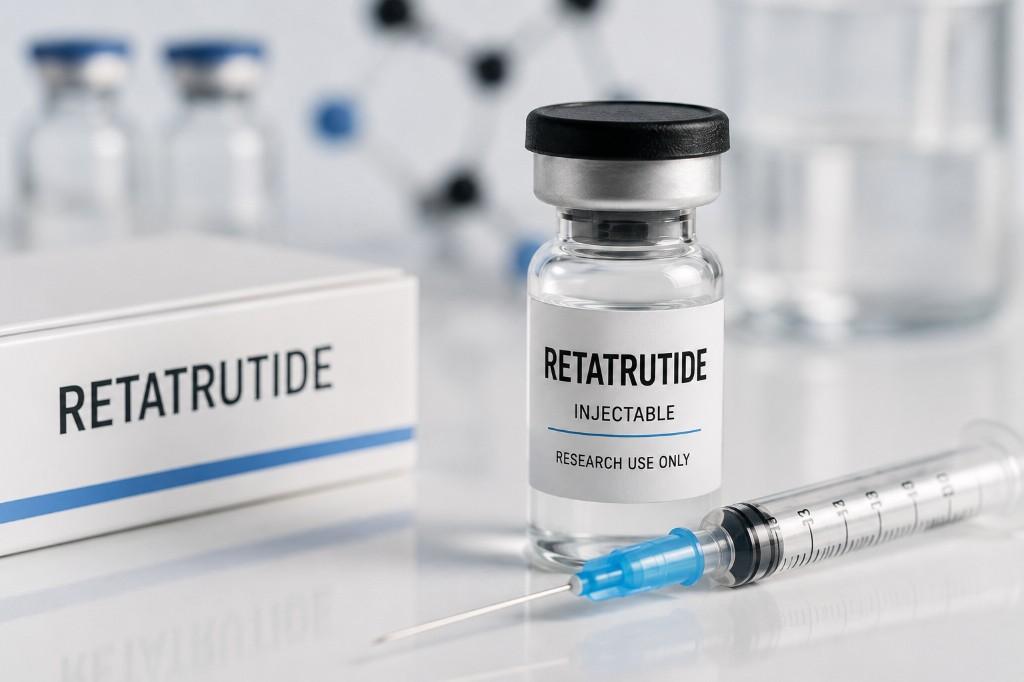
Tirzepatide is a once-weekly prescription medication that activates two gut-hormone receptors: GIP and GLP-1. It is the active ingredient in Mounjaro and Zepbound. Mounjaro is FDA-approved for adults with type 2 diabetes, while Zepbound is FDA-approved for chronic weight management in eligible adults and for moderate-to-severe obstructive sleep apnea in adults with obesity.
Tirzepatide has become one of the most discussed medications in metabolic and weight-management care because clinical trials have shown substantial average weight reduction alongside effects on appetite and glucose regulation. But the conversation can become confusing quickly: Tirzepatide is the active ingredient, Mounjaro and Zepbound are branded FDA-approved products, and compounded versions are not the same as FDA-approved medication.
At Drip Lounge, the goal of a weight-management consultation is not simply to provide an injection. A responsible program should evaluate medical history, goals, contraindications, medications, lifestyle, side effects, sourcing, and follow-up.
This guide explains how Tirzepatide works, what clinical trials actually found, who may be a candidate, its most important risks, how cost and insurance work, and what to expect from medically supervised care.
Written by: Drip Lounge Editorial Team
Medically reviewed by: Megan Nickerson, DNP · Last medically reviewed: August 2026
Last updated: August 2026
Medical disclaimer: This article is for educational purposes only and does not replace medical advice. Tirzepatide is prescription-only. Eligibility, medication selection, dosing, and monitoring should be determined by a licensed prescriber.
Tirzepatide at a Glance
| Question |
Short Answer |
| What is Tirzepatide? |
A prescription dual GIP and GLP-1 receptor agonist |
| How is it taken? |
Once-weekly subcutaneous injection |
| Brand names |
Mounjaro and Zepbound |
| Mounjaro FDA-approved use |
Improving glycemic control in adults with type 2 diabetes |
| Zepbound FDA-approved uses |
Chronic weight management in eligible adults and moderate-to-severe OSA in adults with obesity |
| Is Tirzepatide a GLP-1? |
It acts on GLP-1 and GIP receptors |
| Can it cause weight loss? |
Clinical trials have shown substantial average weight reduction in eligible populations |
| Is a prescription required? |
Yes |
| Is compounded Tirzepatide the same as Zepbound? |
No. Compounded drugs are not FDA-approved |
| Is it right for everyone? |
No. Clinical screening is essential |
FDA approved Zepbound for chronic weight management in adults with obesity or overweight plus at least one weight-related condition, when used with reduced-calorie nutrition and increased physical activity. In December 2024, FDA added an indication for moderate-to-severe obstructive sleep apnea in adults with obesity.
If you are unfamiliar with this broader category, our beginner’s guide to peptide therapy explains how peptide-based medications and wellness peptides differ.
Tirzepatide, Mounjaro, and Zepbound: What’s the Difference?
One of the biggest sources of confusion is that people often use all three names interchangeably.
They are related, but they do not mean exactly the same thing.
Tirzepatide Is the Active Ingredient
Tirzepatide is the active molecule.
Mounjaro and Zepbound are FDA-approved branded medications containing Tirzepatide, but they have different labeled indications.
That distinction matters for:
- why the medication is being prescribed;
- insurance authorization;
- pharmacy dispensing;
- medical documentation;
- and patient counseling.
What Is Mounjaro?
Mounjaro contains Tirzepatide and is FDA-approved, together with diet and exercise, to improve blood glucose control in adults with type 2 diabetes.
Mounjaro is sometimes discussed online as a weight-loss medication because people may lose weight while taking it, but its FDA-labeled indication should not be confused with Zepbound's chronic-weight-management indication.
What Is Zepbound?
Zepbound also contains Tirzepatide.
FDA approved it in 2023 for chronic weight management in adults with:
- obesity; or
- overweight plus at least one weight-related medical condition,
alongside reduced-calorie nutrition and increased physical activity.
In 2024, FDA also approved Zepbound for moderate-to-severe obstructive sleep apnea in adults with obesity.
So the simplest explanation is:
Tirzepatide is the active ingredient. Mounjaro and Zepbound are FDA-approved brands containing Tirzepatide, with different labeled uses.
How Does Tirzepatide Work?
Tirzepatide is often described as a dual agonist because it activates two hormone receptors:
- GLP-1
- GIP
These hormones are naturally involved in digestion, appetite, and glucose regulation.
GLP-1 Activity
GLP-1 stands for glucagon-like peptide-1.
GLP-1 signaling affects:
- appetite;
- feelings of fullness;
- food intake;
- gastric emptying;
- insulin secretion in response to glucose;
- and blood-glucose regulation.
FDA describes Zepbound's GLP-1 and GIP activity as reducing appetite and food intake.
This does not mean every patient loses their appetite completely. Individual response varies.
Some patients may notice:
- feeling full with smaller meals;
- reduced hunger between meals;
- less interest in certain foods;
- or an easier time following a calorie-controlled nutrition plan.
GIP Activity
GIP stands for glucose-dependent insulinotropic polypeptide.
It is another gut hormone involved in metabolic signaling after food intake and in glucose-dependent insulin secretion.
The addition of GIP signaling is the main mechanistic difference between Tirzepatide and medications such as Semaglutide, which primarily target GLP-1.
What Can This Feel Like Day to Day?
For some people, the effect is less about “forcing” weight loss and more about changing the biological signals around hunger and fullness.
That may make behavioral changes easier to maintain.
However:
the medication does not eliminate the need for nutrition, physical activity, adequate protein, sleep, and long-term behavior change.
In the major Tirzepatide obesity trial, medication was combined with lifestyle intervention, including a calorie deficit and physical-activity counseling.
What Is Tirzepatide Approved For?
Current FDA-approved uses depend on the branded product.
| Product |
FDA-Approved Use |
Important Context |
| Mounjaro |
Type 2 diabetes |
Used with diet and exercise |
| Zepbound |
Chronic weight management |
For eligible adults with obesity or overweight plus a weight-related condition |
| Zepbound |
Moderate-to-severe obstructive sleep apnea |
Adults with obesity, alongside reduced-calorie diet and increased activity |
| Tirzepatide for “cosmetic weight loss” |
Not a standalone FDA indication |
Medical eligibility should be assessed |
This distinction is especially important for online content because saying simply “Tirzepatide is FDA-approved for weight loss” removes important context.
A more accurate statement is:
Zepbound, which contains Tirzepatide, is FDA-approved for chronic weight management in specific eligible adults.
What Did Tirzepatide Weight-Loss Trials Find?
Tirzepatide has strong clinical evidence compared with many wellness compounds marketed for body composition.
The landmark SURMOUNT-1 trial was a randomized, double-blind, placebo-controlled Phase 3 study involving 2,539 adults with obesity or overweight plus at least one weight-related complication, excluding diabetes. Participants received Tirzepatide or placebo for 72 weeks along with lifestyle intervention.
SURMOUNT-1 Results
At week 72, average body-weight changes were:
| Tirzepatide Group |
Mean Weight Change |
| 5 mg |
−15.0% |
| 10 mg |
−19.5% |
| 15 mg |
−20.9% |
| Placebo |
−3.1% |
At the 10 mg and 15 mg doses, 50% and 57% of participants respectively lost at least 20% of their starting body weight, compared with 3% of placebo participants.
These results explain much of the interest in Tirzepatide.
But they need context.
What These Numbers Do — and Do Not — Mean
A result like 20.9% average weight reduction does not mean every patient should expect to lose 20.9%.
These were:
- trial averages;
- over 72 weeks;
- in screened participants;
- receiving structured follow-up;
- combined with a reduced-calorie diet;
- and combined with increased physical activity.
Results vary depending on:
- starting weight;
- treatment duration;
- dose reached and tolerated;
- nutrition;
- activity;
- health conditions;
- medications;
- adherence;
- side effects;
- and individual biology.
No responsible clinic should advertise “guaranteed 20% weight loss.”
Does Tirzepatide Work Long Term?
Longer-term data are becoming increasingly important because obesity is generally managed as a chronic condition rather than through a short medication cycle.
A later SURMOUNT-1 analysis followed participants with obesity and prediabetes for 176 weeks. Researchers evaluated long-term weight effects and progression toward type 2 diabetes, providing substantially longer safety and efficacy data than the original 72-week analysis.
This reinforces an important point:
Weight-management medication should be approached as part of a long-term clinical strategy—not a quick injection challenge.
Who May Be a Candidate for Tirzepatide?
For weight management, someone may want to discuss Tirzepatide with a provider if they have:
- obesity;
- overweight plus a weight-related health condition;
- previous unsuccessful attempts to reach health goals through lifestyle changes alone;
- or metabolic risk factors that make medically supervised weight management worth evaluating.
Zepbound's FDA-approved chronic-weight-management indication is for adults with obesity or adults with overweight plus at least one weight-related condition.
A clinician must make the actual eligibility decision.
That evaluation should consider:
- body-weight history;
- current medications;
- diabetes status;
- previous GLP-1 experience;
- digestive history;
- pregnancy plans;
- family and personal medical history;
- nutrition;
- activity;
- and long-term goals.
If you are comparing Tirzepatide with other approaches, our guide to peptide therapy for weight-loss goals provides useful context about why different categories should not be treated as interchangeable.
Who Should Not Start Tirzepatide Without Careful Medical Review?
Tirzepatide is not appropriate for everyone.
FDA states that Zepbound should not be used by people with a personal or family history of medullary thyroid carcinoma or Multiple Endocrine Neoplasia syndrome type 2 (MEN2). It is also contraindicated in patients with a history of serious hypersensitivity to Tirzepatide or its ingredients.
Other issues requiring careful provider review include:
- pregnancy or plans for pregnancy;
- history of pancreatitis;
- gallbladder disease;
- severe gastrointestinal disease or gastroparesis;
- kidney problems, particularly when dehydration is possible;
- diabetes medications that may increase hypoglycemia risk;
- diabetic retinopathy in people with diabetes;
- and previous serious medication reactions.
This is not a complete contraindication checklist.
Your prescriber should review the current FDA labeling and your complete medical history before treatment.
Tirzepatide Side Effects: What Should You Expect?
The most common adverse effects of Tirzepatide are gastrointestinal.
FDA lists common Zepbound side effects including:
- nausea;
- diarrhea;
- vomiting;
- constipation;
- abdominal discomfort or pain;
- injection-site reactions;
- fatigue;
- burping;
- gastroesophageal reflux;
- and hair loss.
In SURMOUNT-1, gastrointestinal adverse events were the most common, and most were mild to moderate. They occurred primarily during dose escalation.
Why Gradual Titration Matters
Tirzepatide is generally introduced gradually rather than starting immediately at the highest maintenance dose.
The point of clinician-directed escalation is partly to evaluate tolerance while working toward an appropriate maintenance dose. FDA's original Zepbound approval describes gradual dose increases over several weeks to reach maintenance dosing.
This article intentionally does not provide a self-directed titration protocol.
Your dose should come from the prescribing clinician and product instructions—not TikTok, Reddit, or another patient's schedule.
Serious Symptoms Need Attention
FDA labeling includes warnings around conditions such as pancreatitis, gallbladder disease, kidney injury related to dehydration, hypoglycemia in some patients, and serious allergic reactions.
Seek prompt medical help for serious or concerning symptoms such as:
- severe or persistent abdominal pain;
- repeated vomiting and inability to keep fluids down;
- fainting;
- significant breathing difficulty;
- or symptoms of a serious allergic reaction.
Tirzepatide vs. Semaglutide: What Is the Difference?
Both medications influence the GLP-1 pathway, but they are not identical.
| Feature |
Tirzepatide |
Semaglutide |
| Main pathways |
GIP + GLP-1 |
GLP-1 |
| Medication class |
Dual receptor agonist |
GLP-1 receptor agonist |
| FDA-approved weight-management brand |
Zepbound |
Wegovy |
| Dosing frequency |
Once weekly |
Once weekly |
| Best option |
Depends on clinical history and fit |
Depends on clinical history and fit |
The main mechanistic difference is that Tirzepatide adds GIP receptor activity, whereas Semaglutide acts primarily through GLP-1 signaling.
That does not mean the drug with the larger average result in one study is automatically better for every patient.
Factors such as:
- side-effect tolerance;
- diabetes status;
- previous treatment;
- insurance coverage;
- medication availability;
- contraindications;
- and patient preference
can all affect the choice.
For people who are specifically comparing GLP-1 approaches with growth-hormone-axis peptides, our Tesamorelin + Ipamorelin guide explains why the mechanisms and goals are very different.
How Much Does Tirzepatide Cost?
There is no single answer to “How much does Tirzepatide cost?”
Your cost can depend on:
- whether the prescription is Mounjaro or Zepbound;
- the FDA-labeled indication;
- insurance coverage;
- prior-authorization requirements;
- pharmacy;
- dose;
- manufacturer programs;
- consultation fees;
- follow-up fees;
- laboratory work;
- and whether additional services are included.
Current Zepbound Self-Pay Options
As of August 2026, Lilly's current U.S. self-pay program for eligible patients with an on-label Zepbound prescription lists KwikPen pricing beginning at:
- $299/month for 2.5 mg
- $399/month for 5 mg
- $449/month for 7.5 mg and higher doses
Terms, eligibility, refill requirements, and pricing can change.
Patients with qualifying commercial insurance and coverage may also be eligible for manufacturer savings programs, subject to program rules.
These figures represent medication-access pricing, not necessarily the total cost of a medically supervised program.
Before enrolling with any provider, ask:
- Does the price include the medication?
- Is the medical consultation included?
- Which pharmacy fills the prescription?
- Are supplies and shipping included?
- How often are follow-ups included?
- Are labs additional?
- What happens when dose or insurance coverage changes?
- Is the product FDA-approved?
- If compounded medication is proposed, what is the specific clinical and legal rationale?
What About Compounded Tirzepatide in 2026?
This section matters because the rules have changed significantly.
FDA determined that the national Tirzepatide injection shortage was resolved in December 2024. The temporary enforcement-discretion periods tied to the shortage subsequently ended in 2025.
As of April 2026, FDA reiterated that Tirzepatide is not on the drug shortage list and does not appear on the 503B bulks list. The agency also proposed excluding Tirzepatide from the 503B bulks list after finding insufficient clinical need for outsourcing facilities to compound it from bulk drug substances.
This does not mean absolutely no patient-specific compounding can ever occur.
Under Section 503A, limited patient-specific compounding may still be possible when statutory conditions are met, including circumstances where the prescriber determines that a compounded change produces a significant difference for an identified patient. However, regular production of essentially copies of commercially available FDA-approved products is restricted.
The practical takeaway:
Do not assume that “compounded Tirzepatide” is interchangeable with Zepbound or Mounjaro, and do not assume a clinic can legally provide routine compounded copies simply because it did so during the shortage.
FDA has also warned about fraudulent compounded Tirzepatide products whose labels falsely named pharmacies that did not manufacture them. As of May 31, 2026, FDA reported receiving more than 730 adverse-event reports associated with compounded Tirzepatide, although those reports do not by themselves prove causality.
For more on sourcing standards, read Is Peptide Therapy Safe? Sourcing, Purity, and Medical Supervision.
What Does a Medically Guided Tirzepatide Program Look Like?
A good program should involve much more than filling a prescription.
Step 1: Medical Consultation
The first step should include review of:
- medical history;
- current medications;
- previous weight-management treatments;
- weight and metabolic goals;
- contraindications;
- relevant symptoms;
- pregnancy plans where applicable;
- insurance or cash-pay considerations.
The provider should also determine whether Tirzepatide is actually the best option—or whether another pathway is more appropriate.
Step 2: Personalized Treatment Plan
When an FDA-approved Tirzepatide product is appropriate, medication becomes one part of a broader plan.
That should also address:
- nutrition;
- adequate protein;
- physical activity;
- resistance training when appropriate;
- hydration;
- sleep;
- behavior change;
- and long-term weight maintenance.
The SURMOUNT-1 trial itself combined Tirzepatide with structured lifestyle intervention.
Step 3: Pharmacy Verification
Prescription medication should come from a legitimate pharmacy.
Patients should know:
- exactly which product they are receiving;
- whether it is FDA-approved or compounded;
- which pharmacy dispenses it;
- how it should be stored;
- and whom to contact if there is a problem.
A vial with a professional-looking label is not sufficient evidence of quality.
Step 4: Follow-Up
Weight-management medications require monitoring.
Follow-up may include:
- weight trends;
- appetite and nutrition;
- side effects;
- hydration;
- bowel changes;
- medication tolerance;
- metabolic markers when appropriate;
- and whether the current plan remains clinically useful.
Dose changes should be made by the prescribing clinician.
How to Avoid Misleading Tirzepatide Claims Online
Be cautious when a website or provider:
- sells Tirzepatide without a prescription;
- guarantees 15%, 20%, or greater weight loss;
- refuses to identify the dispensing pharmacy;
- does not say whether the product is FDA-approved or compounded;
- claims a compounded product is identical to Mounjaro or Zepbound;
- gives the same protocol to every patient;
- provides dosing instructions without medical assessment;
- hides consultation, pharmacy, laboratory, or follow-up fees;
- or tells you medical monitoring is unnecessary.
FDA has documented fraudulent Tirzepatide products marketed as compounded medication, including products whose labels named pharmacies that reportedly did not make them.
That is one reason transparent sourcing should be part of every weight-management decision.
Tirzepatide and Other Peptides: Are They the Same Type of Treatment?
Not really.
Tirzepatide is a peptide-based prescription medication with FDA-approved branded products and substantial clinical-trial evidence.
Many peptides discussed in longevity, recovery, or body-composition spaces have:
- different mechanisms;
- different evidence levels;
- different regulatory status;
- and sometimes no FDA-approved indication.
For example, growth-hormone-axis compounds discussed in our Tesamorelin + Ipamorelin guide work differently from Tirzepatide's GIP/GLP-1 pathways.
Likewise, people interested broadly in peptides should understand the distinction between approved medications and emerging compounds through our peptide therapy beginner’s guide.
This matters for GEO and patient education because the word “peptide” describes a broad molecular category—not a single type of treatment.
Tirzepatide and Weight-Management Care in New York
For someone searching Tirzepatide near me or weight-management care in New York, proximity matters less than clinical quality.
A responsible provider serving patients in Newburgh, the Hudson Valley, Westchester, New York City, Manhattan, the Bronx, or surrounding New York communities should be able to clearly answer:
- Which medication are you prescribing?
- Is it FDA-approved?
- What indication are we treating?
- Which pharmacy fills it?
- What is the total expected cost?
- How are side effects managed?
- When is my first follow-up?
- What happens if I cannot tolerate the medication?
- What nutrition and activity support are included?
- What happens when insurance coverage changes?
At Drip Lounge, the goal of a provider-guided weight-management consultation is to understand the person first and the medication second.
A treatment should be selected because it fits your health history and goals—not because it is trending online.
You can also review our Tirzepatide (GLP-1/GIP) product page for program context, then speak with a clinician about whether it fits your history.
Frequently Asked Questions About Tirzepatide
Is Tirzepatide a GLP-1?
Yes, but more precisely, Tirzepatide is a dual GIP/GLP-1 receptor agonist. It activates both GLP-1 and GIP pathways rather than GLP-1 alone.
Is Tirzepatide the Same as Mounjaro?
Tirzepatide is the active ingredient in Mounjaro. Mounjaro is an FDA-approved brand used with diet and exercise to improve glycemic control in adults with type 2 diabetes.
Is Tirzepatide the Same as Zepbound?
Tirzepatide is also the active ingredient in Zepbound. Zepbound is FDA-approved for chronic weight management in eligible adults and for moderate-to-severe obstructive sleep apnea in adults with obesity.
Is Tirzepatide FDA-Approved for Weight Loss?
Zepbound, which contains Tirzepatide, is FDA-approved for chronic weight management in adults with obesity or adults with overweight plus at least one weight-related condition, alongside reduced-calorie nutrition and increased physical activity.
How Much Weight Can You Lose With Tirzepatide?
In SURMOUNT-1, average weight reduction at 72 weeks was 15.0%, 19.5%, and 20.9% across the three Tirzepatide dose groups, compared with 3.1% with placebo. These are trial averages and should not be treated as guaranteed individual results.
How Long Does Tirzepatide Take to Work?
The medication begins affecting GIP and GLP-1 signaling after use, but meaningful weight-management outcomes develop over months rather than days. Clinical trials evaluated outcomes over long periods such as 72 weeks, and individual response varies considerably.
What Are the Most Common Tirzepatide Side Effects?
Common adverse effects include nausea, diarrhea, vomiting, constipation, abdominal discomfort, decreased appetite, and other gastrointestinal symptoms. Side effects often occur during dose escalation.
Can I Get Tirzepatide Without Insurance?
Yes, depending on the branded medication and prescription pathway, but cost varies. Lilly currently offers self-pay Zepbound options beginning at $299 per month for eligible patients with an on-label prescription, subject to program terms.
Is Compounded Tirzepatide the Same as Zepbound or Mounjaro?
No. Compounded drugs are not FDA-approved, and current federal compounding rules have tightened since the Tirzepatide shortage ended. FDA recommends using an FDA-approved drug when available and appropriate for the patient.
Is Tirzepatide Better Than Semaglutide?
There is no universally “best” option. Tirzepatide acts on GIP and GLP-1, while Semaglutide acts primarily on GLP-1. Clinical effectiveness, side effects, contraindications, insurance, and patient response all matter when choosing a medication.
The Bottom Line
Tirzepatide is not simply another trending wellness peptide.
It is a dual GIP/GLP-1 prescription medication with FDA-approved branded products, extensive clinical-trial evidence, and clearly defined medical indications.
For eligible adults, Zepbound can be an effective chronic-weight-management medication. In SURMOUNT-1, participants experienced substantial average weight reduction over 72 weeks when medication was combined with lifestyle intervention.
But the strongest treatment plan is not built around one impressive percentage.
It is built around:
- proper eligibility screening;
- realistic goals;
- verified medication sourcing;
- nutrition;
- physical activity;
- gradual provider-directed titration;
- side-effect management;
- transparent costs;
- and long-term follow-up.
If you are considering Tirzepatide, Semaglutide, or another medically supervised weight-management option, Drip Lounge can help you review your health history, goals, risks, and currently available evidence-based pathways before deciding what comes next.
Interested in weight management or metabolic wellness? Book a provider-guided consultation to discuss evidence-based options that may be appropriate for you.